
If you have severe bone loss in your upper jaw, you may hear that traditional dental implants will not work. That can feel discouraging, especially if you want fixed teeth instead of dentures. You still have options.
Zygomatic implants are recommended over traditional implants when you do not have enough upper jaw bone to support regular implants and want to avoid bone grafts or sinus lifts.
These longer implants anchor into your cheekbone, which stays dense even after years of tooth loss.
You may also consider this option if past implants failed or bone grafting did not succeed. With careful planning and the right surgical team, you can often receive stable teeth much sooner than with grafting procedures.
Key Takeaways
- Zygomatic implants work best when severe upper jaw bone loss prevents traditional implants.
- They anchor in the cheekbone and often avoid bone grafts or sinus surgery.
- Careful evaluation and planning help ensure safe placement and long-term stability.
Schedule Your Zygomatic Implant Consultation in Stuart, FL Today
Key Differences Between Zygomatic and Traditional Implants
Zygomatic implants and traditional dental implants differ in where they anchor, how they are placed, and who qualifies for them.
These differences matter most when you face upper jaw bone loss and want a fixed solution without extra grafting procedures.
Anatomical Anchor Points
The biggest difference is where the implant attaches to bone.
Traditional full mouth dental implants anchor into the alveolar bone of your maxilla or lower jaw. This is the bone that once held your natural teeth.
If you still have enough height and width in your upper jaw, this area usually supports standard implants well.
Zygomatic implants anchor into the zygomatic bone, also called your cheekbone. This bone sits higher and farther back than the maxilla. It is dense and strong, which makes it useful when the upper jaw has shrunk.
If you have severe upper jaw bone loss, your maxilla may not hold a regular implant. In that case, surgeons may use the cheekbone instead.
Implant Design and Procedure
Zygomatic implants differ in both length and angle.
Traditional dental implants are shorter and placed straight into the jawbone. Your surgeon makes a small incision, prepares the bone, and inserts the implant.
After that, you wait for osseointegration, which is when the bone grows around the implant.
Zygomatic implants are much longer. They can measure 30–52 mm and are placed at an angle, often around 45–60 degrees, to reach the cheekbone.
Because they pass near the sinus area, placement requires advanced planning and imaging.
The surgery is more complex and usually takes longer.
Treatment Timelines
Both options rely on osseointegration, but your path may look different.
With traditional dental implants, you often wait 3–6 months after placement before your dentist attaches the final crown or bridge. If you need bone grafting first, your treatment time increases.
Zygomatic implants may reduce the need for grafting. In some cases, your dentist can place a temporary fixed bridge soon after surgery. However, healing still takes several months before you receive the final restoration.
Total treatment time for either method often ranges from 6–12 months. The exact schedule depends on your health, bone condition, and how well your body heals.
Bone Requirements
Bone volume often decides which option fits you.
Traditional dental implants require enough bone height and thickness in your maxilla. If your upper jaw has thinned due to tooth loss, gum disease, or long-term denture use, you may not qualify without bone grafting or a sinus lift.
Zygomatic implants are designed for cases of severe maxillary atrophy. They bypass the weak upper jaw and use the stronger cheekbone instead. This approach helps when grafting has failed or when grafting is not a good option.
If you have advanced upper jaw bone loss, your surgeon may recommend zygomatic implants to avoid multiple graft procedures and long healing periods.
Visit Our Office For Your Advanced Implant Evaluation in Stuart, FL
When Are Zygomatic Implants Preferred?
You may need zygomatic implants when your upper jaw cannot support regular implants. These cases often involve severe bone loss, sinus limits, or the need to replace all upper teeth at once.
Severe Maxillary Bone Loss and Atrophy
If you have severe maxillary bone loss, traditional implants may not work. This often happens after years of missing teeth, gum disease, or long-term denture use. Your upper jaw can shrink over time, leading to an atrophic maxilla.
In advanced cases of severe maxillary atrophy, the remaining bone in the posterior maxilla becomes too thin or soft to hold standard implants.
Regular implants need enough height and width for stability. Without that support, they can fail.
Zygomatic implants anchor into your cheekbone instead of your upper jaw. The cheekbone stays dense even when the maxillary bone shrinks.
Many specialists recommend them for patients with severe upper jaw loss who cannot receive conventional implants.
This approach often avoids long healing periods linked to rebuilding lost bone.
Failed Bone Grafting or Traditional Implants
You may have already tried bone grafting to rebuild your upper jaw. While grafts help many patients, they do not always succeed. A failed bone graft can leave you with less usable bone than before.
Bone grafting also requires months of healing before implant placement. If the graft does not integrate well, your dentist may not be able to place traditional implants safely.
Zygomatic implants bypass the grafted area entirely. They do not depend on the weakened maxillary bone. This makes them a strong option after failed traditional implants or repeated graft failures.
Because they anchor in dense cheekbone, they provide stability even when your upper jaw cannot. This can reduce the number of surgeries and shorten your overall treatment time.
Maxillary Sinus Limitations
Your maxillary sinus sits just above your upper back teeth. When you lose teeth in the posterior maxilla, the sinus often expands downward. This reduces the bone height needed for regular implants.
In these cases, your dentist may suggest a sinus lift. A sinus lift raises the sinus membrane and adds bone beneath it. However, if you have severe maxillary bone loss, there may not be enough native bone to support this procedure.
Zygomatic implants avoid this problem. They anchor higher into the cheekbone and often bypass the sinus area. These implants secure into the cheekbone when conventional implants are not an option due to limited upper jaw bone.
This approach helps when sinus size or bone loss makes sinus lift surgery unpredictable.
Full-Arch Rehabilitation Needs
If you need to replace all your upper teeth, you may benefit from full-arch rehabilitation with zygomatic implants. This is common in patients with severe maxillary atrophy and long-term denture wear.
Instead of placing many traditional implants, your surgeon can use two to four zygomatic implants to support a fixed bridge.
In some cases, they combine them with regular implants in the front of your mouth, where bone is often stronger.
Zygomatic implants are also used in complex reconstructions and edentulous arches.
You often receive temporary fixed teeth soon after surgery. This allows you to move forward with a stable, non-removable solution even when your upper jaw cannot support traditional implants.
Patient Selection Criteria and Candidacy
You need enough bone, stable health, and realistic goals before you move forward with this treatment.
Careful patient selection criteria help your oral and maxillofacial surgeon or implant dentist decide if you are a strong candidate for zygomatic implants.
Surgical Risk Factors
You may qualify when you have severe maxillary bone loss that prevents placement of traditional implants. Many experts list extreme upper jaw atrophy as the main reason to choose zygomatic implants.
Your surgeon will study your CBCT scan to measure bone height and width.
If your upper jaw cannot hold standard implants, and bone grafting would require multiple surgeries, you may be a better candidate for zygomatic implants.
You also need enough bone quality in the cheekbone area. The zygoma must provide stable anchorage.
Other surgical risk factors include:
- Poor oral hygiene
- Active gum disease
- Heavy smoking
- Limited mouth opening
Your implant dentist will review these issues carefully. Clear guidance for patient selection lowers your risk of implant failure and sinus problems.
Medical Considerations
Your general health plays a major role in candidacy. You must control chronic diseases before surgery.
For example, uncontrolled diabetes can slow healing and raise your risk of infection. If your blood sugar stays high, your surgeon may delay treatment until your condition improves.
You should also discuss:
- Heart disease
- Bleeding disorders
- Immune system conditions
- Use of blood thinners
- History of radiation to the head or neck
If you cannot tolerate multiple grafting procedures due to health limits, zygomatic implants may offer a single-stage solution.
An ITI consensus statement on indications for zygomatic implants notes their use in patients with severe bone deficiency and in cases where grafting is not ideal.
Your care team will review your full medical history before they confirm you as a candidate for zygomatic implants.
Congenital and Acquired Defects
You may also qualify if you have structural defects of the upper jaw. These can be present at birth or develop later in life.
People born with cleft lip and palate often have missing or weak upper jaw bone. In these cases, zygomatic implants can anchor a prosthesis when standard implants cannot gain support.
Acquired defects also matter. You may have lost part of your upper jaw due to:
- Trauma
- Severe infection
- Benign cysts
- Tumor removal surgery
Zygomatic implants were first used in patients who had partial or complete maxillectomy. Today, surgeons still rely on them when traditional implants lack enough bone support.
Your oral and maxillofacial surgeon will evaluate the size and shape of your defect. They will confirm whether your anatomy allows safe placement and long-term stability.
See If You Qualify for Zygomatic Implants
Diagnostic and Surgical Planning
You need clear imaging and careful planning before placing zygomatic implants. Detailed scans and guided tools help you avoid critical structures and place implants in the correct position.
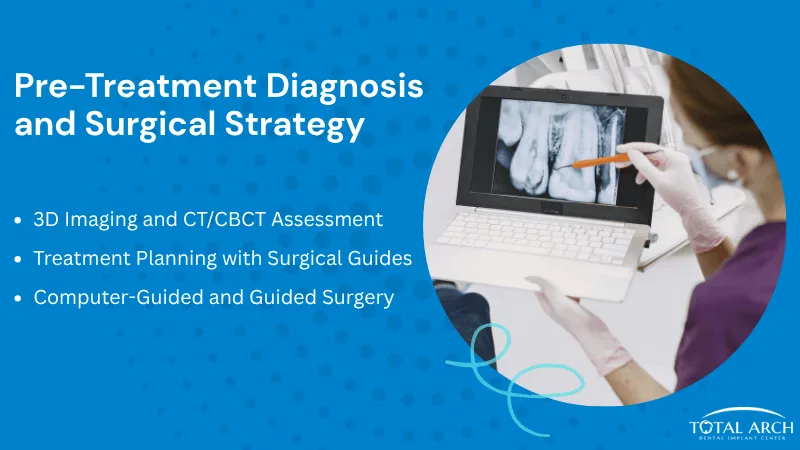
3D Imaging and CT/CBCT Assessment
You should always start with 3D imaging. A standard 2D X-ray does not show enough detail for zygomatic implants.
A CT or CBCT scan lets you review the maxilla, zygomatic bone, and sinus anatomy in three dimensions. The ITI consensus recommendations advise obtaining a scan that includes the mid-face so you can assess bone volume and sinus health with accuracy.
You need to check:
- Bone volume in the maxilla and zygoma
- Sinus condition and signs of infection
- Orbital floor and nearby anatomical structures
- Thickness of the lateral maxillary wall
This level of detail helps you reduce the risk of sinus or orbital complications. It also supports precise surgical planning before you enter the operating field.
Treatment Planning with Surgical Guides
You should base your treatment planning on both the 3D scan and the final prosthetic design. Zygomatic implants must support a fixed or removable prosthesis, so implant position must match restorative goals.
Planning software allows you to overlay the planned prosthesis onto your CT or CBCT data. This step helps you choose implant length, angulation, and entry point. It also shows whether you need additional conventional implants to splint the case.
Surgical guides can assist with angulation and entry position. However, you must understand the anatomy fully before relying on a guide.
Zygomatic implant placement remains a complex procedure that depends heavily on surgical skill and experience.
Computer-Guided and Guided Surgery
You may consider computer-guided surgery or dynamic navigation to improve accuracy. These tools can help you follow the planned implant trajectory more closely.
Still, guided systems do not replace direct visualization. Because the implant path travels near the sinus, orbit, and infratemporal space, you must maintain clear surgical access and orientation at all times.
Guided approaches may improve implant alignment and reduce positioning errors. Some clinicians use guides to improve accuracy and long-term success.
You should view computer-guided surgery as a support tool, not a substitute for strong anatomical knowledge and hands-on skill.
Surgical Procedure and Immediate Loading
Zygomatic implant surgery uses longer implants and precise planning to secure support in the cheekbone.
Your surgeon also decides how to manage anesthesia and whether you can receive teeth the same day.
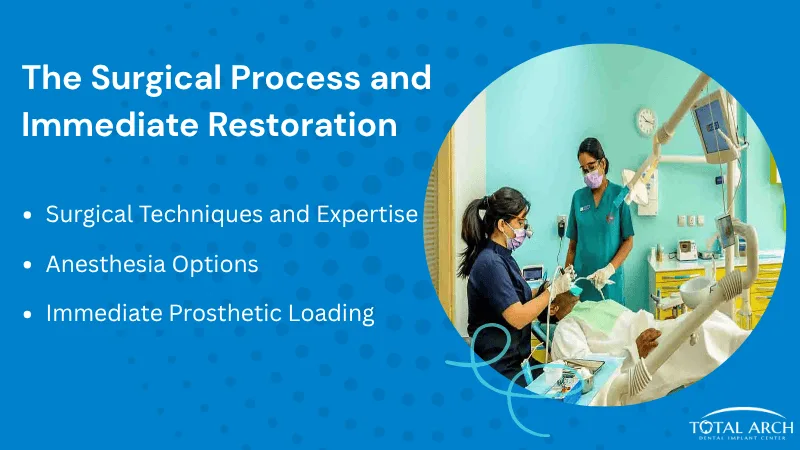
Surgical Techniques and Expertise
Zygomatic implant surgery places long titanium implants, often 35–55 mm, into the zygomatic bone instead of the upper jaw. This approach helps when you have severe bone loss in the back of the maxilla and cannot support traditional implants.
Your surgeon plans the case with 3D imaging to avoid the sinus and nearby structures. The implant travels through or along the sinus wall and anchors in dense cheekbone for strong support.
This procedure requires advanced surgical expertise. The anatomy is complex, and small errors can affect the sinus or orbit. Because of this, trained specialists often perform the surgery, especially in full-arch cases.
In many cases, surgeons place two to four zygomatic implants as part of a full-arch plan.
Anesthesia Options
You and your surgeon choose anesthesia based on your health, anxiety level, and the number of implants placed.
Common options include:
- Local anesthesia to numb the surgical area
- IV sedation to help you relax while staying responsive
- General anesthesia if you prefer to be fully asleep
For full-arch treatment with several implants, many patients choose IV sedation or general anesthesia. These options help control movement and improve comfort during longer procedures.
Your team will review your medical history and explain risks and benefits. You should know how long the surgery will take, what you will feel afterward, and how pain control will work once you go home.
Immediate Prosthetic Loading
In many cases, you can receive a temporary fixed bridge within 24 to 72 hours. This approach is called immediate loading.
Immediate loading can shorten treatment time compared to bone grafting, which may require months of healing. According to research on immediate loading of zygomatic implants, both immediate and delayed protocols show high long-term survival rates.
Some centers even offer “same-day teeth.” A fixed provisional bridge can be attached soon after surgery when the implants achieve strong primary stability.
If your implants do not reach enough stability, your surgeon may delay loading. In those cases, the implants can remain covered for several months to allow bone integration before attaching the final prosthesis.
Long-Term Outcomes, Benefits, and Limitations
Zygomatic implants show high survival over many years, but they also carry specific risks you should understand.
Your long-term results depend on careful planning, bone quality, and how well you maintain your oral and sinus health.

Success Rates and Longevity
Research shows strong long-term outcomes for zygomatic implants. A large review on long-term treatment outcomes with zygomatic implants reported a 96.2% survival rate at about six years.
That means most implants stayed in place and functioned well. The same review found a low annual implant failure rate of about 0.7% per year.
If you wonder how long zygomatic implants last, studies report follow-ups of 3 to 12 years, with many implants still stable at the end of those periods.
Because these implants anchor in the cheekbone, they rely less on weak upper jaw bone. This can improve long-term stability in people with severe bone loss.
Both fixed prosthetic teeth and some removable prostheses supported by zygomatic implants also show high survival, close to 94% in several studies.
Immediate loading, where you receive teeth soon after surgery, may show slightly higher survival than delayed loading in some reports.
Risks and Complications
Zygomatic implants involve more complex surgery than traditional implants. Your provider must work close to the sinus cavity and sinus membrane.
The most common biological complication is sinusitis. In the same systematic review, sinusitis occurred in about 14% of patients over five years. Most cases were manageable, but some required medical or surgical treatment.
Other possible risks include:
- Implant failure
- Sinus membrane irritation
- Oro-antral communication (an opening between mouth and sinus)
- Soft tissue problems around the implant
Your sinus health before surgery matters. Chronic sinus disease can increase risk. Careful imaging and surgical planning reduce these problems, but they cannot remove risk completely.
Quality of Life Improvements
Many patients choose zygomatic implants to avoid long bone graft procedures. This can shorten treatment time and reduce the number of surgeries you face.
Studies show patients report higher satisfaction after treatment. In the same review of long-term outcomes with zygomatic implants, patients noted improved comfort and function.
With stable fixed prosthetic teeth, you can chew better and speak more clearly than with unstable removable dentures. You also avoid adhesives and daily denture movement.
If you struggled with loose upper dentures due to poor bone quality, zygomatic implants can offer firmer support. Many patients report better confidence in social settings and fewer food restrictions once treatment is complete.
Frequently Asked Questions
Zygomatic implants anchor in your cheekbone instead of your upper jaw. Dentists use them when bone loss in the upper jaw prevents stable placement of standard implants.
What are the benefits of zygomatic implants compared to conventional dental implants?
Zygomatic implants attach to your cheekbone, which often has more stable bone than your upper jaw. This design can let you avoid bone grafts or sinus lifts in many cases.
You may complete treatment in fewer stages because you skip graft healing time. That can reduce total treatment time and the number of surgeries.
They also help when traditional implants fail due to poor bone quality. In these cases, your surgeon can secure support in the cheekbone instead of trying to rebuild the jaw.
How do I know if I’m a suitable candidate for zygomatic implants?
You may be a candidate if you have severe bone loss in your upper jaw. Dentists often recommend them when standard implants cannot anchor safely.
Your dentist will take 3D scans to measure your bone height and width. They will also review your health history, including smoking, diabetes, and past implant or graft failures.
If you have been told you need major bone grafting, you can ask whether zygomatic implants offer another option. A full exam and imaging will confirm what works best for you.
Can you explain the cost differences between zygomatic and traditional dental implants?
Zygomatic implants usually cost more per implant than traditional ones. The surgery is more complex and requires advanced training and planning.
However, you may avoid the added cost of bone grafts or sinus lifts. Skipping those procedures can balance some of the higher surgical fees.
Your final cost depends on how many implants you need, whether you need extra procedures, and the type of final bridge or denture. Always ask for a written treatment plan with clear fees.
Are there specific conditions or situations where zygomatic implants are the preferred choice?
Zygomatic implants work best when you have extreme upper jaw bone loss. A review on indications for zygomatic implants lists severe maxillary atrophy as the main reason.
They are also used after failed bone grafts or failed traditional implants. Some patients choose them to avoid staged grafting procedures.
In certain cases, such as after tumor surgery or major trauma to the upper jaw, surgeons use zygomatic implants to support a fixed or removable prosthesis.
These cases require careful planning by a specialist team.
What should I consider when looking for a dental professional to perform zygomatic implant surgery?
You should look for an oral and maxillofacial surgeon or prosthodontist with specific training in zygomatic implants. Ask how many of these cases they complete each year.
This procedure is more complex than placing standard implants. It involves working near the sinus and cheekbone, so experience matters.
Ask to see before-and-after cases and discuss possible risks and complications. Clear communication and detailed imaging are key parts of safe treatment.
How do zygomatic implants differ in the surgical procedure from traditional dental implants?
Traditional implants anchor directly into your jawbone. Zygomatic implants secure into your cheekbone.
The surgeon places them at a longer angle, often passing near or through the sinus to reach the cheekbone. Because they are longer implants, placement requires advanced surgical skill.
In many cases, your dentist can attach a fixed bridge soon after surgery. Your exact timeline depends on your bone stability and overall health.