
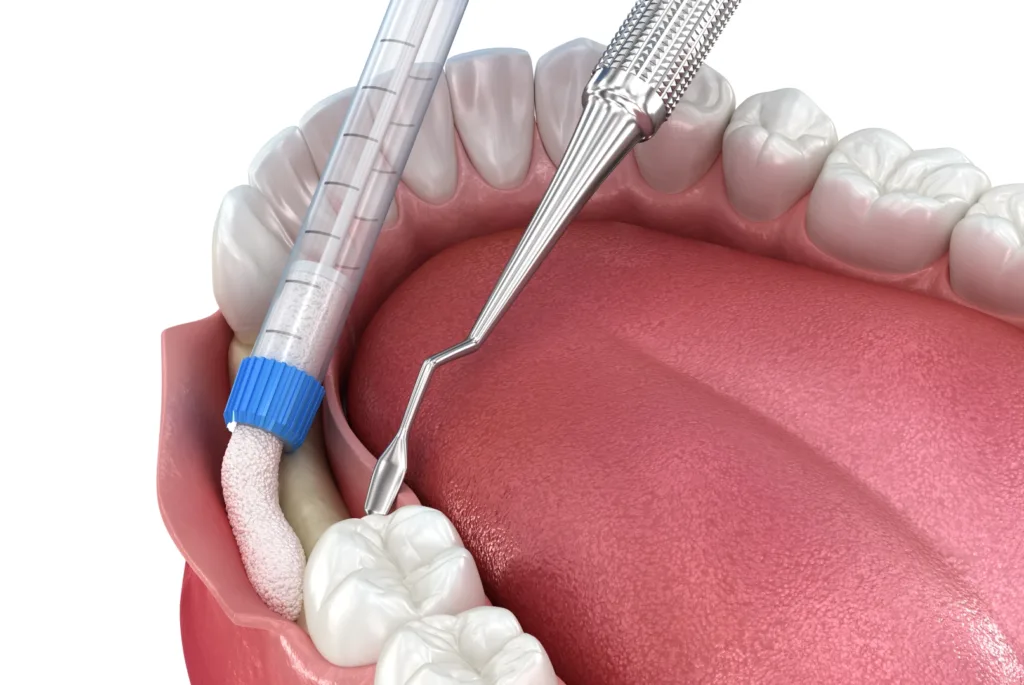
Having dental implants requires a dentist to place metal rods into your jawbone. This ensures that the implants look and act just as a natural tooth would. Some patients may have experienced jaw bone deterioration from missing teeth, which will require a dentist to perform bone grafting. Not all candidates for dental implants will need bone grafting, but it is an extra level of precaution for those who have significant bone loss or deterioration. In this blog, you will learn more about a bone grafting procedure, who is a candidate for bone grafting, and why it is used for implants.
What Is Bone Grafting?
Bone grafting is a type of oral surgery that is used to strengthen the jaw bone. Surgeons will either take bone from another area of your body or use synthetic bone grafting powder to add strength to your jaw.
There are a few different types of bone grafting including:
- Allograft: Using human bone from a donor bank
- Alloplast: Lab-made bone, but made with natural minerals
- Autogenous: Using bone from other parts of your body
- Xenograft: Bones from animals that were donated to a bank. Pig and cow bone are often commonly used for dental implants.
The process of bone grafting is used to help your body focus on repair work while keeping the dental implant stable. Your body can heal some bone and tissue loss, so bone grafting helps this process by causing less trauma to the affected area.
When Bone Grafting Is Necessary
Not all patients who seek dental implants will need bone grafting. Dental implants can work for many different oral needs and may not need additional support if your jaw bone is intact. Here are some specific situations that could warrant bone grafting.
Severe Tooth Decay Or Gum Disease
Severe tooth decay can cause your jawbone to deteriorate as well. A prolonged period of missing or unused teeth will lead to loss of bone density, which makes the jawbone unable to handle implants. The lack of stimulation from tooth roots is what causes your bones to weaken.
Gum disease can also cause the weakening of nerves, muscles, and bones. The bacteria will destroy bone tissue making it difficult to know if your implants will be able to withstand daily chewing or talking.
Injury Or Trauma
Head trauma, car accidents, sports accidents, or other major trauma to the jawbone may impact your eligibility for implants. Trauma and impact to the jawbone may cause bone loss and tissue deterioration that could impact the hold your jaw will have on the titanium rods of dental implants.
The Bone Grafting Process
Once your dentist or oral specialist has determined you are a candidate for dental implants they will take x-rays or CT scans to help determine if bone grafting is necessary and what type will work best for your jawbone.
Next, is the actual grafting process. The area will be cleaned and prepped and your surgeon will make an incision in the gum to separate it from the bone. Depending on the severity, you may need local anesthesia, sedation, or general anesthesia to make the procedure less painful. If you had a bone graft from another area of your body, this procedure and material will have been collected previously. The bone graft material will be placed in the gap bone where the dentist wants that bone to grow together. It is then secured with a dissolvable adhesive or membrane with screws. The site may be sewn up as well to help ensure proper healing
Healing From A Bone Graft
After the procedure, you will need to follow special instructions to help your mouth heal properly to provide stability for implants. Some instructions may include changing the dressing during the next 24 hours, taking antibiotics, applying ice packs to reduce swelling, eating soft foods, sleeping with your head elevated, avoiding smoking, etc. Proper healing will prevent infections and ensure the bone grows stronger in order to handle implants.
Even if you follow instructions to a tee, it can take several months before your jawbone is able to handle implants. Bone grafting is an intense oral procedure, just like removing your wisdom teeth. Allowing your body to fully heal before undertaking another surgical procedure is wise if you want to prevent problems and infections.

Bone Grafting From Total Arch Dental Implants
Bone grafting is often necessary for those with past dental trauma, gum disease, or severe tooth loss. Not all candidates for implants will need a bone graft in order to be successful, but if needed Total Arch will ensure the best procedure possible. Our team uses state-of-the-art technology to ensure effective treatment and bone graft placement. With us, you can have peace of mind knowing you are in the best hands for restoring your oral health. No matter what service you need, Total Arch can help you gain confidence in your smile again. Reach out to us to learn more about achieving a healthier smile.